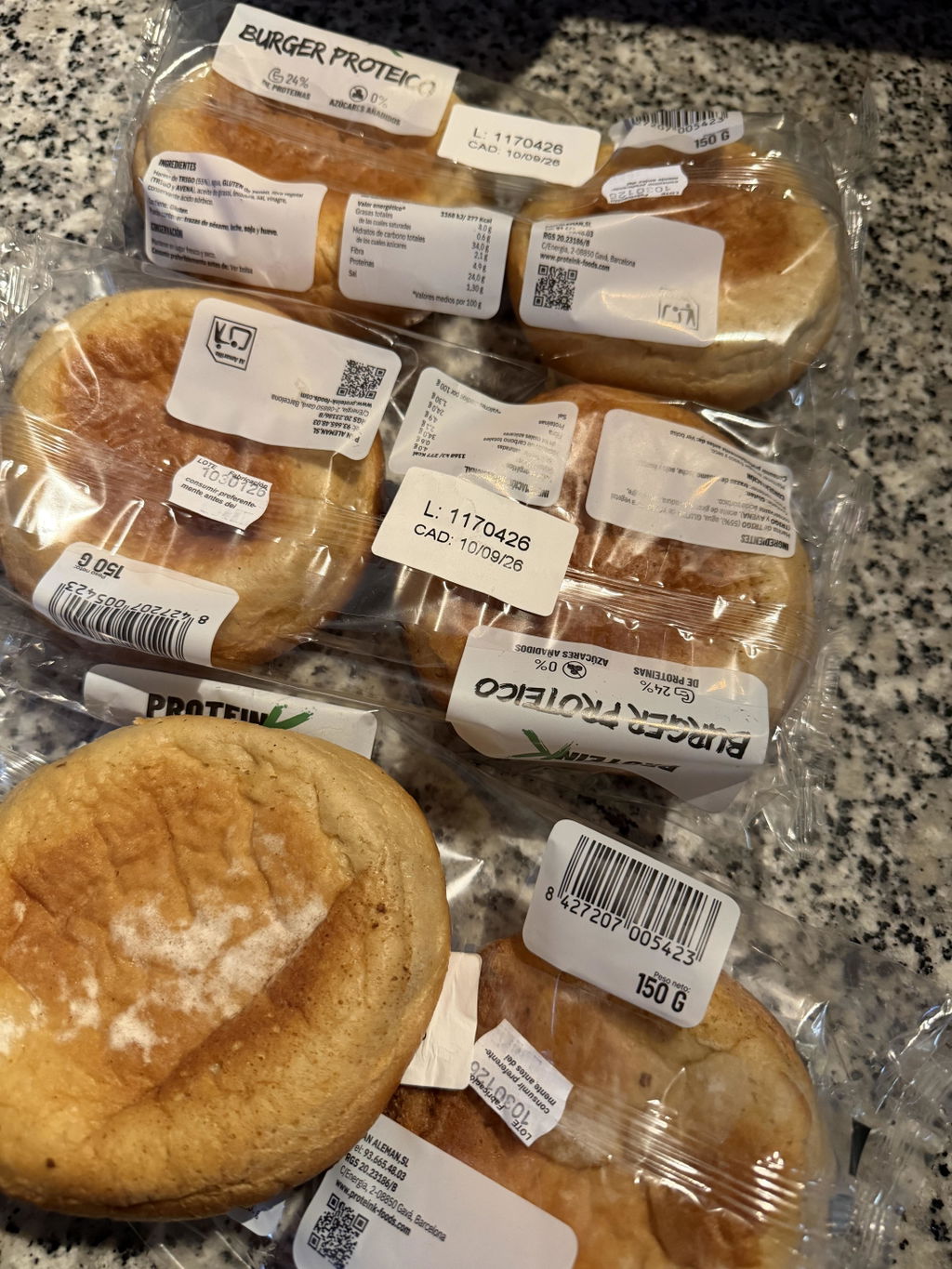
8% discount on Protein Bread when you buy 2 or more units. (Automatically applied in the shopping cart).

How to choose your sports protein (key criteria)
The “best” protein isn't a famous label: it's the one that helps you reach your daily dose , without discomfort and within your budget.
What do I look at first?
- Protein type and digestibility : whey for complete profile and easy digestion; in vegetable, mixtures (pea + rice/soy) to complete amino acids.
- Leucine per serving : target 2–3 g of leucine (normally 20–30 g of protein ), key to activating muscle protein synthesis.
- Protein percentage : ideally ≥75–80% per 100g. Less filler = more usable protein per scoop.
- Tolerance : If you experience gas or bloating, try whey isolate (less lactose) or plant-based milk with enzymes .
- Clean label : few sweeteners and gums. If you prioritize flavor, choose sucralose/"gourmet" formulas; if you prefer natural, choose stevia (may leave an aftertaste).
- Transparency : visible batch and, if you compete, third-party analysis.
Plant-based protein for hypertrophy: pea + rice vs soy
- Peas + rice : they complement each other (lysine + methionine). Aim for ≥80% protein and adjust the scoop to reach ~2.5–3 g of leucine .
- Isolated soybeans : complete on their own, good yield and price, more "earthy" flavor for some.
- Digestion : Vegetables with enzymes (bromelain/papain) are usually easier to digest.
Casein: when to use it for growth (and when not to)
Casein releases amino acids in a sustained manner.
- When it adds up : before going to sleep or during long periods without eating.
- For hypertrophy : it doesn't "outperform" whey protein; it complements it. Use it if you have a light dinner or go >5–6 hours without protein.
- Sensations : thicker. If it feels heavy, go back to whey or plant-based milk.
How much protein should I take daily to gain muscle? Quick chart by weight
General target for volume/hypertrophy: 1.6–2.2 g/kg/day , divided into 3–5 doses of ~ 0.3 g/kg (≈20–40 g).
Indicative table
|
Weight |
1.6 g/kg |
1.8–2.0 g/kg |
2.2 g/kg |
|
55 kg |
88 g |
99–110 g |
121 g |
|
65 kg |
104 g |
117–130 g |
143 g |
|
75 kg |
120 g |
135–150 g |
165 g |
|
85 kg |
136 g |
153–170 g |
187 g |
How does sports protein fit in?
- Cover as much as you can with protein-rich food and use 1–2 shakes to fill any gaps .
- Example: 70 kg at 1.9 g/kg = 133 g/day . If you reach 100 g with food, add 1–2 doses of 20–25 g .
Timing and combinations that work (creatine, BCAAs, post-carb)
- Timing : the important thing is the total for the day . Post-workout is convenient: 20–30g of protein + 30–60g of carbs if you want to replenish quickly.
- Creatine monohydrate : 3–5 g daily (consistency > timing). Taking it with a shake improves adherence.
- BCAAs : If you're already getting your daily protein, they don't provide any significant extra benefit . They're useful if you train fasted and won't be consuming complete protein afterwards.
- Hydration and sodium : improve performance and pump; don't neglect them, especially when bulking.
Etiquette checklist (before buying)
- % protein per 100 g (aims for ≥75–80%).
- Leucine per serving (2–3 g; adjust the scoop if it is vegetable).
- Type : WPC (price), WPI (purity), Vegan Blend (vegan/intolerance), Casein (slow release).
- Lactose : if it doesn't agree with you, choose WPI or Vegan .
- Additives : the fewer, the better the tolerance.
- Transparency : visible batch and, if applicable, third-party testing.
- Actual price : calculate the price per 10g of protein .
Formula
Price per 10 g = (Price of the container / (total grams × % protein)) × 10
Common mistakes when buying protein (and how to avoid them)
- Choose by taste and not by label → First % protein and leucine.
- Replacing meals with shakes → They are supplements , not the basis of the diet.
- Ignore digestion → Change type or adjust dose if discomfort occurs.
- Obsessing over timing → The daily total and progressing in loads weigh more.
- Forget the context → Enough calories, sleep, and planned training.